The oil ministry has stopped making fresh allocation of natural gas from domestic fields to the city gas sector, threatening the viability of Rs 2 lakh crore investment planned in the sector besides leading to a hike in CNG and piped cooking gas prices to record levels, sources said. Despite a decision of the Union Cabinet to give 100 per cent gas supply under 'no cut' priority to the city gas distribution (CGD) sector, current supplies have been maintained at March 2021 demand level. Besides, the process of allocating gas on a six-monthly average drawl also is punishing the CGD entities driving growth.

Faced with the prospect of revenue loss on fuel jumping to Rs 700 billion (Rs 70,000 crore) next fiscal, Petroleum Ministry on Wednesday called for "harsh decisions" even as it hinted that cleaner Euro-IV fuel in 13 metro cities will cost more from April 1.
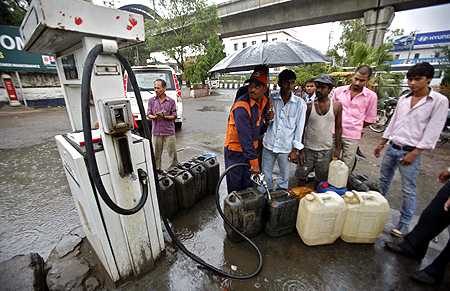
Petrol price was on Saturday cut by Rs 0.50 per litre but there will be no change in rates of diesel.

Retail inflation inched up to 4.48 per cent in October due to an uptick in food prices, government data showed on Friday. The Consumer Price Index (CPI) based inflation was at 4.35 per cent in September and 7.61 per cent in October 2020.
A litre of diesel will cost Rs 48.01 compared to Rs 49.31 at present

Discussion on the two bills could not take place as Opposition members continued to stage protests demanding a discussion on the Pegasus snooping allegations and the farmers' demand of repealing the three new agri laws.

Opposition members led by Trinamool Congress MP Sukhendu Sekhar and Congress leader Mallikarjun Kharge asked the government to clear its stand over the nationality of the minister. Without naming the minister, Sekhar said: "The prime minister has been allowed to lay a list of the ministers after the reshuffle. Go through Wikipedia, then you will find that the name of the gentleman... a minister of state for home affairs is a reportedly a Bangladeshi." Sekhar was also supported by Kharge and other opposition members.

The hike in aviation turbine fuel prices is likely to lead to a 10-14 per cent increase in fares on metro routes and long-haul flights. The oil companies hiked ATF prices by 14 per cent as a result of global rise in crude oil prices over the last few months. Now, most airlines, including Jet Airways and SpiceJet, are looking at imposing a differential surcharge - a smaller increase on shorter routes than longer routes.

RIL-BP currently produce gas from Dhirubhai-1 and 3 field and oil and gas from MA field, three of the over one-and-half dozen discoveries made in KG-D6 block
A 14.2-kg subsidised LPG cylinder in Delhi will now cost Rs 507.42 as against Rs 505.34 previously, according to a price notification of State-owned fuel retailers.

Retail inflation dipped marginally to 6.44 per cent in February, mainly on account of a slight easing in prices of food and fuel items though it remained above the Reserve Bank's comfort level of 6 per cent for the second month in a row. As per the government data released on Monday, the Consumer Price Index (CPI)-based inflation was at 6.52 per cent in January and 6.07 per cent in February 2022. The retail inflation rate for the food basket worked out to be 5.95 per cent in February, marginally lower than 6 per cent in January.

The fall in international oil prices had resulted in six consecutive reduction in petrol prices since August and two in diesel in the last one month and there was possibility of another round of cuts this weekend.
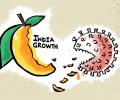
The economic growth may have slowed to 3.5 per cent in fourth quarter of 2021-22 from 5.4 per cent in the previous three-month period due to the impact of higher commodity prices on margins, decline in wheat yields and on higher base, Icra Ratings said on Monday. The agency said the hiccups in the recovery of the contact-intensive services attributable to the third wave of Covid-19 in the country may have also affected the economic growth in the quarter. Even the gross value added (GVA) at basic prices (at constant 2011-12 prices) in Q4 FY2022 seems to have eased to 2.7 per cent from 4.7 per cent in Q3 FY2022, it said.

Buying a car, particularly a diesel-powered one, is set to pinch the customers' pockets even more from the next financial year, as the second phase of Bharat Stage VI (BSVI) emission norms kicks in. The rules require cars to be compliant with real driving emission (RDE) norms, which measure pollutants emitted by cars while they are being driven on the road, unlike in a laboratory test. The norms may increase the cost of producing diesel vehicles by nearly Rs 75,000 to Rs 80,000, and petrol-powered ones by Rs 25,000 to Rs 30,000, analysts said.

With a revival in demand and consumption, FMCG companies are looking forward to 2022 with positivity and hopes of sustaining a healthy growth trend across both rural and urban markets while gearing up to cater to the ever-increasing digitally active consumers and tackle the challenge of higher commodity prices. Health and wellness and convenience are going to remain key trends and FMCG companies are strengthening their core brands, driving premiumisation across their portfolios with targeted innovations as consumers are gravitating towards trusted brands looking for quality, purity and hygiene, in continuation of the trend that started since the pandemic last year. FMCG makers are accelerating digitalisation and are investing in building capability in e-commerce and Direct-to-Consumer channels, identifying it as a key vector of their growth as the threat of a possible third wave is still not away.

The country's GDP grew at the fastest pace in seven quarters at 7.7 per cent in the January-March period, retaining the fastest growing major economy tag on robust performance by manufacturing and service sectors as well as good farm output.
The hike comes on back of over 12 per cent hike on June 15. ATF price on that day were raised by Rs 3,949 to Rs 36,252 per kilolitre in Delhi.

Mumbai, Bengaluru, and Kochi airports have hiked their landing charges by up to 45 per cent, increasing the operating cost for airlines at a time they are facing financial constraints because of the two months of grounding and weak demand.

Indian automakers dispatched nearly 2.92 lakh passenger vehicles, the highest ever for February so far, driven by strong demand for cars and utility vehicles, industry body SIAM said on Friday. The total passenger vehicle dispatches from companies to dealers last month increased 11 per cent to 2,91,928 units from 2,62,984 units in February 2022. Passenger car sales rose to 1,42,201 units in February against 1,33,572 units in the year-ago period.

The primary and immediate impact of a depreciating rupee is on the importers who will have to shell out more for the same quantity and price. However, it is a boon for the exporters as they receive more rupees in exchange for dollars. The rupee depreciation has wiped away some of the gains that would have accrued to India from international oil and fuel prices dropping to pre-Ukraine war levels.

Eicher Motors is a leader in the premium motorcycle segment, where it holds market share of over 85 per cent under the Royal Enfield (RE) brand. The company's joint venture VE Commercial Vehicles (VECV) with Volvo, where it holds 54.5 per cent stake, gives it a strong footing in commercial vehicles (CVs). The company had good results in FY23 and it has a strong balance sheet and good operating margins.
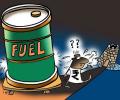
A swift recovery in oil demand in India is not only helping the stability of the global market, it is giving huge fiscal headroom to the government in terms of additional excise duty.

As fuel prices continue its northward march with petrol and diesel being sold at Rs 80.73 and Rs 72.83 per litre in the national capital, at least 21 opposition parties, led by the Congress have staged a Bharat Bandh protesting the rise in fuel prices and depreciation of the rupee.

RBI retained the GDP growth for the financial year 2018-19 at 7.4 per cent.
